

Wat Mahathat Ayutthaya: Complete Temple Guide (2026)
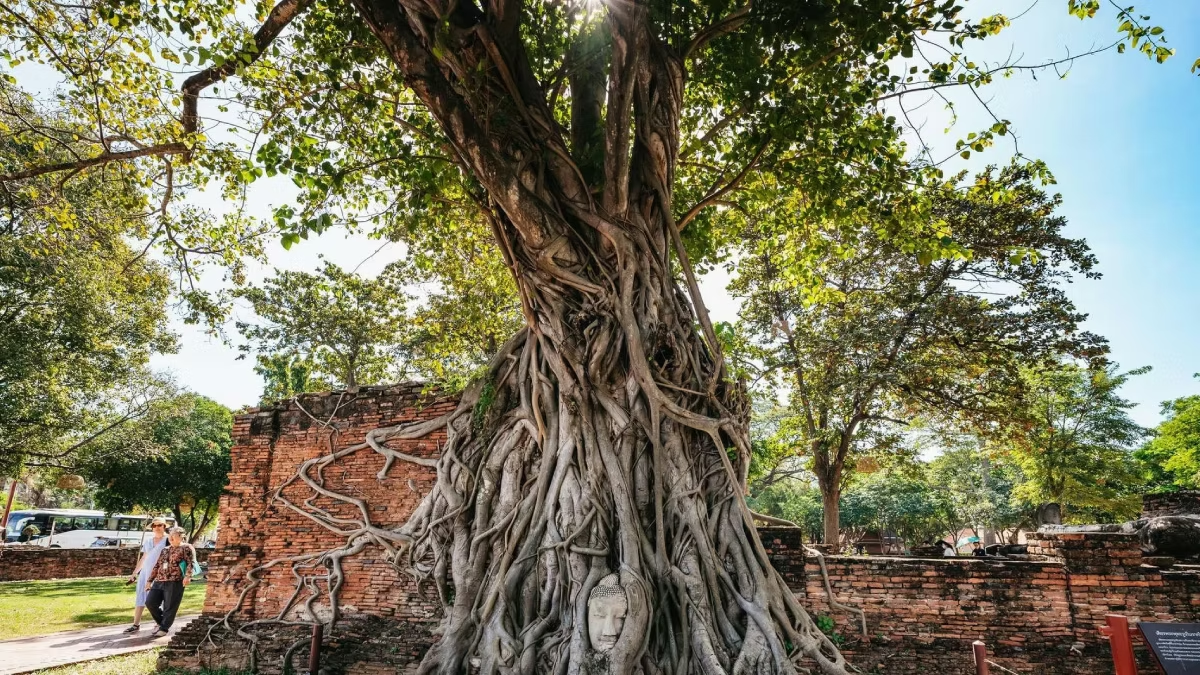
Wat Mahathat is Ayutthaya’s most iconic temple and the site of the famous sandstone Buddha head entwined in the roots of a Banyan tree — the most photographed image in the entire Historical Park. Built in the 14th century as the spiritual centre of the Ayutthaya Kingdom, it served as the residence of the Supreme Patriarch of Thai Buddhism. Entrance costs 50 THB, and the temple opens at 8:30 AM. Arrive early — this is the single most visited site in Ayutthaya and tour groups arrive from Bangkok from around 9:30 AM onwards.
No temple in Ayutthaya stops visitors in their tracks quite like Wat Mahathat. Not because of its scale — much of it has been reduced to eroded brick and truncated prangs — but because of a single image that has become one of the most recognised photographs in all of Thai travel: a serene sandstone face, eyes half-closed in meditative calm, held within the grasp of Banyan tree roots that have grown around it over centuries.
That image is real. This is the temple.
Quick Facts
Wat Mahathat (Temple of the Great Relic) is a 14th-century temple ruin in central Ayutthaya Historical Park, famous for a sandstone Buddha head entwined in the roots of a Banyan tree. It was built around 1374 during King Borommaracha I’s reign and served as the residence of the Supreme Patriarch of Thai Buddhism — the highest religious authority in the kingdom. Entrance costs 50 THB (included in the 220 THB combo pass). Opening hours are 8:30 AM to 6:00 PM daily.
| Detail | Information |
|---|---|
| Thai name | วัดมหาธาตุ |
| Translation | Temple of the Great Relic |
| Built | c. 1374, reign of King Borommaracha I |
| Location | Central island, Ayutthaya Historical Park |
| Entrance fee | 50 THB (included in 220 THB combo pass) |
| Opening hours | 8:30 AM – 6:00 PM daily |
| Time to allow | 45–75 minutes |
| Best time to visit | 8:30–10:00 AM or 3:30–5:30 PM |
History
Wat Mahathat was the spiritual heart of the Ayutthaya Kingdom. Built around 1374 during the reign of King Borommaracha I and significantly expanded by King Ramesuan, the temple served as the official residence of the Supreme Patriarch — the head of all Buddhist monks in Siam. This was not merely one of many royal temples: it was the religious epicentre of a kingdom that would last 417 years and encompass a million inhabitants at its peak.
The name translates as Temple of the Great Relic, reflecting its function as the repository of the kingdom’s most sacred Buddhist relics. These were housed in the central prang — once the tallest structure in Ayutthaya and visible from miles around — alongside treasures that represented the accumulated devotion of centuries of Ayutthayan kings.
Royal ceremonies of the highest order were conducted here. Monks came from across the kingdom to study and practise. The Supreme Patriarch exercised authority from within its walls that extended throughout the Siamese religious world.
In 1767, the Burmese invasion that ended the Ayutthaya Kingdom destroyed much of what Wat Mahathat had been. The invaders systematically decapitated Buddha images throughout the temple — a deliberate act intended to desecrate the sacred power of the site and demoralise the defenders. The central prang eventually collapsed in the early 20th century. The temple was largely abandoned and overgrown until the Fine Arts Department began conservation work in the 1950s.
Book This TourThe Buddha Head in Tree Roots
The most famous element of Wat Mahathat — and arguably the most famous single image in all of Ayutthaya — is the sandstone Buddha head in the western corner of the temple grounds, entwined in the exposed roots of a large Banyan tree.
How it got there is uncertain. The most widely accepted account is straightforward: when the Burmese systematically decapitated Buddha statues across the city in 1767, one head fell near a young Banyan tree. As the temple lay abandoned and overgrown for nearly two centuries, the tree’s roots grew slowly around the head — lifting it, encasing it, and holding it upright with what appears, to modern eyes, like deliberate reverence.
An alternative theory suggests the head was moved by a treasure hunter in the early 20th century, placed near the tree wall and abandoned when it proved too heavy to remove. The roots then grew around it in its new position.
Neither theory is confirmed. What is not uncertain is the image itself: a face of quiet, meditative serenity held in the grip of living wood, ancient stone and living nature merged into a single composition that has no equivalent anywhere in the world.
Photography etiquette: When photographing the Buddha head, you must kneel or sit so that your head is lower than the Buddha’s. This is enforced by attendants who will ask you to comply and is both a cultural requirement and a practical truth — the image is more compelling from below, angled upward through the roots, than from above.
What to See at Wat Mahathat
The central prang platform: The original central prang — once the tallest in Ayutthaya — has collapsed, leaving its base and surrounding structures. Walking this platform gives a sense of the temple’s original scale and the ambition of its construction.
Rows of truncated Buddha statues: Throughout the grounds, rows of headless seated Buddha images line the pathways and platforms. These are the direct legacy of the 1767 Burmese invasion — their heads systematically removed, their bodies left in place. They are among the most quietly moving sights in Ayutthaya: the evidence of deliberate desecration that happened here, and from which the city never recovered.
The Buddha head in tree roots: In the temple’s western section, accessible via the main internal pathways. Look for the crowd — it is never unattended.
Minor prangs and viharans: Several smaller prang structures and the foundations of viharans (assembly halls) survive in various states of preservation across the extensive grounds.
Practical Visitor Information
Buy the combo pass here. Wat Mahathat is the ideal first temple to visit in Ayutthaya — buy the 220 THB combo pass at the ticket booth here and it covers five other major temples across the park. You’ll save money and remove the need to carry exact change to every gate.
Arrive at 8:30 AM. The ticket window opens at 8:30 AM. The 8:30–9:30 AM window is when the famous Buddha head can be photographed without dozens of other visitors in the frame. By 10:00 AM, Bangkok day tour groups have arrived and the western corner of the temple is consistently busy.
Allow 45–75 minutes. The temple grounds are extensive. Rushing through in 20 minutes is possible but misses the full scope of what’s here — the truncated statues, the platform foundations, the minor prangs, and the atmosphere of the place as a whole.
Shade is limited. Bring a hat and water. The grounds offer some tree cover but the main areas are exposed.
Footwear. Keep shoes on across the open grounds — the ancient brick gets very hot. Remove them only before entering any indoor chapel with a Buddha image inside.
Best Time to Visit
Morning (8:30–10:00 AM): Best light, lowest crowds, coolest temperature. The directional morning sun creates strong shadows and textures across the ancient brick that midday overhead light cannot.
Late afternoon (3:30–5:30 PM): The second window. The golden hour light before the 6:00 PM closing is excellent for photography and the temperature has eased from its afternoon peak.
Avoid 10:30 AM–2:30 PM. Peak crowds from Bangkok day tours plus the harshest overhead light.
Getting to Wat Mahathat
Wat Mahathat is centrally located in the Historical Park, on Naresuan Road. From the train station: take the 5 THB ferry across the Pa Sak River, then it’s a 15-minute walk or 5-minute cycle.
By bicycle: it is one of the first major temples you reach from the park entrance on Naresuan Road.
Frequently Asked Questions
What is the Buddha head in tree roots at Ayutthaya?
A sandstone Buddha head from the 14th or early 17th century, entwined in the exposed roots of a large Banyan tree at Wat Mahathat. The head is believed to have been decapitated during the Burmese invasion of 1767 and gradually overgrown over two centuries of abandonment.
Can I touch the Buddha head at Wat Mahathat?
No. Visitors must maintain a respectful distance and are not permitted to touch the tree or the statue. A guard watches the area throughout the day.
Why do visitors kneel at the Buddha head?
Thai Buddhist culture requires that your physical position not be higher than a Buddha image. Kneeling or sitting when photographing ensures your head is below the level of the Buddha’s head.
Is Wat Mahathat worth visiting?
It is the single most important temple in Ayutthaya Historical Park. The Buddha head in tree roots alone justifies the visit; the broader ruins provide a profound picture of what the city was and what the 1767 invasion destroyed.
How long does it take to visit Wat Mahathat?
Allow 45–75 minutes for a thorough visit, including time to walk the full grounds. A rushed circuit of the highlights takes 25–30 minutes.
