

Ayutthaya Temple Travel Tips: Essential Advice for 2026
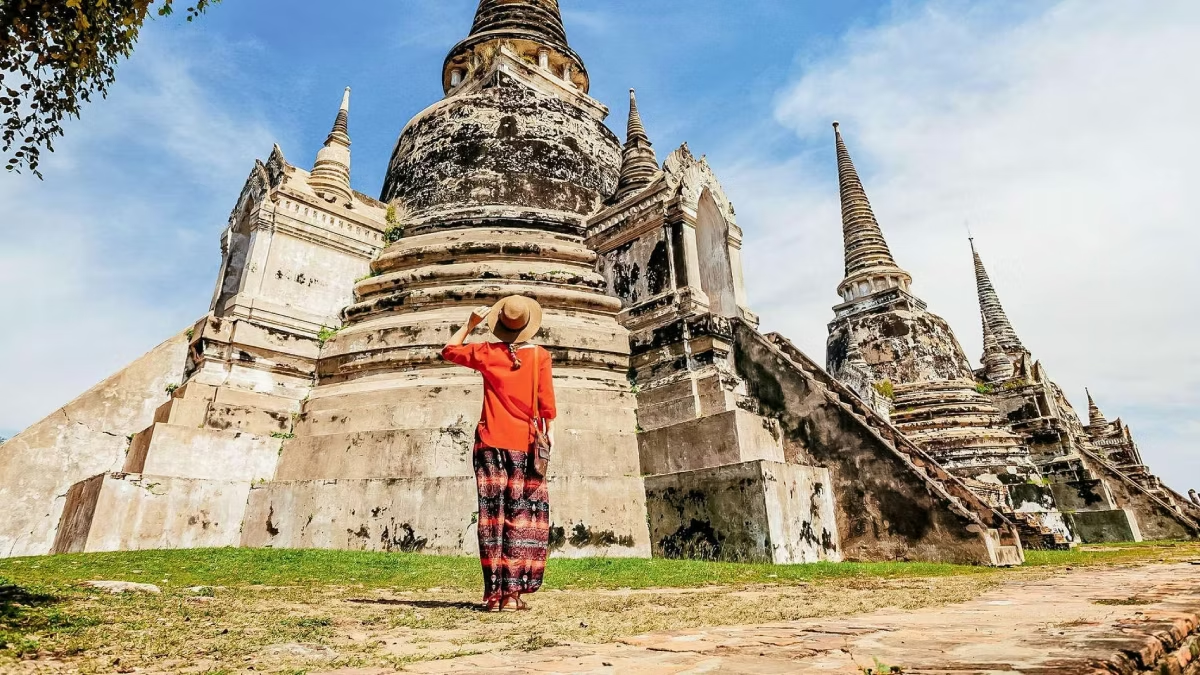
The most important practical tips for visiting Ayutthaya Temple are: arrive at 8:30 AM before tour groups; carry small Thai Baht cash (no cards at ticket booths); dress with covered shoulders and knees before leaving your accommodation; bring at least 1.5 litres of water; use a bicycle rather than a tuk-tuk for the central island circuit; and never climb on any ruin or sit on a Buddha statue regardless of what other visitors do around you.
Ayutthaya Historical Park is one of the most rewarding UNESCO World Heritage Sites in Asia — and one of the most straightforward to visit independently. But a handful of practical issues catch visitors off guard every day. This guide covers everything that makes the difference between a smooth visit and a frustrating one.
Money and Payments
All Ayutthaya temple ticket booths are cash-only — no cards or QR payments accepted. Carry Thai Baht in small denominations (20s and 50s) before entering the park. ATMs are available in Ayutthaya town near the train station but not inside the Historical Park. Budget approximately 220 THB for the combo pass plus 150–300 THB for lunch and drinks.
Cash is essential. Every temple ticket booth in Ayutthaya Historical Park operates on cash only — no cards, no QR payments, no exceptions. Carry 20 and 50 THB notes before entering the park. Large bills (500 or 1,000 THB) are difficult to change at smaller booths, particularly early in the morning.
ATMs are available in Ayutthaya town — near the train station and along the main shopping street — but not inside the Historical Park itself. Withdraw what you need before heading to the temples.
Budget for the day:
- 220 THB combo pass (six major temples) or up to 300 THB for individual tickets
- 50–80 THB bicycle rental
- 150–300 THB for lunch
- Small amounts for drinks, snacks, and tips
Tipping is not required at temples, but is appreciated by tour guides (50–100 THB) and tuk-tuk drivers for a long day of patient waiting (50 THB).
Heat and Sun Protection
Arrive at Ayutthaya temples at 8:30 AM before the heat builds. Carry at least 1.5 litres of water per person for a half-day visit. Wear a wide-brimmed hat and high-SPF sunscreen — the temple grounds are almost entirely open-air with minimal shade. Take a midday break between noon and 2:00 PM during the hot season (March–May).
Ayutthaya’s temples are almost entirely open-air. There is minimal shade. In Thailand’s climate — particularly March through May when temperatures regularly exceed 35°C — this matters enormously.
Start early. The 8:30 AM opening window is the coolest, least crowded, and best-lit time of the entire day. By 11:00 AM the heat is significant; by 1:00 PM it can be overwhelming.
Carry water. Bring at least 1.5 litres of water per person for a half-day visit, more for a full day. Convenience stores and vendors are scattered around the park, but don’t rely on them — particularly at smaller, less-visited temples.
Wear sun protection. A wide-brimmed hat and sunscreen with high SPF are not optional accessories in Thailand’s climate — they’re practical necessities. The ancient brick paths radiate heat from below as well as above.
Take a midday break. The best Ayutthaya days combine morning temple visits with a midday break (a riverfront café, an air-conditioned restaurant, or your accommodation) followed by an afternoon return to the temples. Don’t try to power through noon in the hot season.
Light-coloured clothing. White, cream, and pale colours reflect sunlight. Dark clothing absorbs heat. The temple dress code requires coverage — make sure that coverage is in the most heat-reflective fabric and colour you can find. See our Ayutthaya Temple Dress Code guide.
Temple Etiquette
Never climb on the ruins or sit on Buddha statues at Ayutthaya Historical Park — this is both prohibited and disrespectful at these UNESCO-protected sacred sites. At Wat Mahathat’s tree-root Buddha, kneel or sit so your head is lower than the Buddha’s. Remove shoes before entering any indoor chapel. Keep voices low at active temples like Wat Yai Chai Mongkhon and Wat Na Phra Mane where monks live and practise.
Never climb on the ruins. The ancient brick structures of Ayutthaya Historical Park are fragile UNESCO-protected heritage. Climbing on walls, chedis, or Buddha pedestals causes damage that has accumulated over decades of visitor misuse. Signs at most temples prohibit this. It is also disrespectful — these are sacred sites, not adventure playgrounds.
Never sit on a Buddha statue. This is a serious cultural offence in Thailand. Even posing for a photograph that places you at the same height as a Buddha’s head is considered disrespectful. At Wat Mahathat’s tree-root Buddha, visitors must kneel or sit lower than the Buddha’s head — attendants watch for this and will ask you to comply.
Remove shoes before entering buildings. When entering any indoor chapel or building with a Buddha image, remove shoes before the threshold. You’ll see a row of shoes outside the door as your signal. Also remove hats.
Keep voices low at active temples. Wat Yai Chai Mongkhon, Wiharn Phra Mongkhon Bophit, and Wat Na Phra Mane are active places of Buddhist worship. Speak quietly, move respectfully, and remember that the monks who live here did not sign up to be tourist attractions.
Don’t touch Buddha images. Beyond the obvious (they’re ancient and fragile), touching sacred images is considered disrespectful in Thai Buddhist culture.
Photography
The best light for photography at Ayutthaya temples is 8:30–10:00 AM (morning directional light) and 3:30–5:30 PM (golden hour). Wat Chaiwatthanaram faces west and is best photographed in the late afternoon when the setting sun illuminates the central prang. At Wat Mahathat, photograph the Buddha head from a kneeling position looking upward — this is both culturally required and produces the most compelling composition.
Morning and late afternoon light is best. The harsh overhead sun between 10:00 AM and 3:00 PM flattens the texture of the ancient brick and stone. The golden directional light of 8:30–10:00 AM and 3:30–5:30 PM brings out the grain and colour of the ruins dramatically.
Wat Chaiwatthanaram faces west. This makes it the best site for afternoon and dusk photography — the temple is specifically built to receive late afternoon light across its riverside elevation. Visit in the morning if you want to see it; visit in the afternoon if you want to photograph it.
Kneeling at Wat Mahathat. When photographing the famous Buddha head in tree roots, kneel or sit so your camera is below the Buddha’s eye level. This is both culturally required and produces a better photograph — the upward angle emphasises the tree roots and creates a more compelling composition.
Drones require permits. Flying a drone at Ayutthaya Historical Park requires prior permission from the Fine Arts Department. Launching one without a permit risks confiscation. Check current regulations before bringing drone equipment.
Common Mistakes to Avoid
The most common Ayutthaya visitor mistakes are: arriving at 10:00 AM when Bangkok day tours are already at the major temples; not buying the 220 THB combo pass which saves money if visiting 4 or more of the six included temples; not checking that Wat Ratchaburana and Wat Phra Si Sanphet close at 4:30 PM; and trying to see everything in one rushed afternoon instead of arriving early.
Arriving at 10:00 AM. This is when Bangkok day tours start arriving. The most popular temples — Wat Mahathat in particular — become very crowded by 10:30 AM. Arriving at 8:30 AM gives you 90 minutes of relative quiet at the key sites.
Forgetting to check closing times. Wat Ratchaburana and Wat Phra Si Sanphet both close at 4:30 PM — earlier than most visitors expect. If you plan to visit these two temples, schedule them in the morning. See our full Ayutthaya Temple Opening Hours schedule.
Not buying the combo pass. If you’re visiting four or more of the six Fine Arts Department temples, the 220 THB combo pass saves money and removes the need to carry exact change to each gate. Buy it at your first temple stop. See our Ayutthaya Temple Entrance Fees guide.
Trying to see everything in one rushed afternoon. Ayutthaya is best experienced with time — two days is better than one. The most common traveller regret is not having stayed overnight. See How Many Days Do You Need at Ayutthaya Temple.
Open-ended tuk-tuk arrangements. Agree on your destination(s) and the total price before getting into any tuk-tuk. “I’ll take you on a tour” from an unasked driver may involve detours to commission-earning shops. Be specific: “Wat Chaiwatthanaram, then back — how much?”
Book This TourSafety
Ayutthaya is very safe for visitors. The main risks are practical: heat exhaustion and sunburn from the open-air sites, and uneven ancient brick terrain underfoot. The large water monitor lizards that roam freely in the park are harmless — do not approach or feed them. Carry water, wear sun protection, and watch your footing on brick paths around ruins.
Ayutthaya is safe. Petty crime is very low by regional standards. The main risks at the Historical Park are practical rather than criminal: heat exhaustion, uneven terrain, and sunburn. Carry water, wear sun protection, and watch your step on ancient brick paths — particularly around ruins where the ground can be uneven.
Monitor lizards. Large water monitor lizards (sometimes over a metre long) roam freely around the Historical Park. They are harmless to visitors but can be startling — particularly if one emerges from undergrowth near a temple path. Do not approach or attempt to feed them.
Be aware of scooter and motorbike traffic. On the roads between temples, local traffic moves at normal speed. Cyclists should ride with awareness, particularly on crossings and at intersections near markets.
Language and Communication
English signage is widespread at all major temples in Ayutthaya Historical Park. Ticket booth staff understand basic English for the transaction. Guesthouse staff typically speak good English. Market and street food vendors may have limited English — a translation app covers the gap effectively. Useful Thai phrases: Sawasdee (hello/goodbye), Khob khun (thank you), Tao rai? (how much?).
English signage is widespread at all major temples within the Historical Park. Most ticket booth staff understand basic English for the transaction. Beyond the temples, English proficiency varies — guesthouse staff typically speak good English, while market and street food vendors may have limited English.
A few useful Thai phrases:
- Sawasdee (sawat-dee) — Hello / Goodbye
- Khob khun (kop-kun) — Thank you
- Tao rai? (tow-rai) — How much?
- Phet nit noi (pet nit noy) — A little spicy
Translation apps work well in Ayutthaya for reading Thai menus or communicating with non-English-speaking vendors.
Connectivity
Most Ayutthaya hotels and guesthouses provide free WiFi. Grab and Google Maps work reliably throughout the Historical Park. A Thai SIM card (50–100 THB from AIS, DTAC, or True Move at convenience stores) provides mobile data coverage across all temple sites.
Most hotels and guesthouses provide free WiFi. Grab and Google Maps both work well in Ayutthaya for navigation. A Thai SIM card (available from AIS, DTAC, or True Move at the train station and convenience stores for 50–100 THB) provides reliable data coverage throughout the Historical Park.
Frequently Asked Questions
Is Ayutthaya safe for solo travellers?
Yes. Ayutthaya is consistently described as one of the safest day-trip destinations from Bangkok. Solo travellers — including solo female travellers — report no particular safety concerns beyond the practical heat and sun issues common to all visitors.
Is it safe to drink tap water in Ayutthaya?
No. Drink bottled water only. Water purification tablets or a filtered bottle are useful alternatives for longer stays.
Do I need to speak Thai to visit Ayutthaya independently?
No. English is sufficient at all major temple sites, ticket booths, guesthouses, and most restaurants in the tourist area. A translation app covers the gaps.
Can I use my credit card in Ayutthaya?
At hotels and some restaurants, yes. At temple ticket booths, tuk-tuk drivers, bicycle rental shops, and street food vendors — no. Always carry Thai Baht cash.
Are there toilets at Ayutthaya temples?
Yes. Most major temples have basic public toilet facilities near the entrance. A small fee (5–10 THB) is sometimes charged. Bring your own tissue — paper is not always available.
Is it appropriate to visit Ayutthaya temples during Buddhist holidays?
Yes. Buddhist holidays such as Visakha Bucha Day and Makha Bucha Day see increased numbers of Thai Buddhist visitors paying respect at the temples. Be particularly mindful of quiet and respectful behaviour on these days.
