

Ayutthaya Temple Dress Code: What to Wear (2026 Guide)
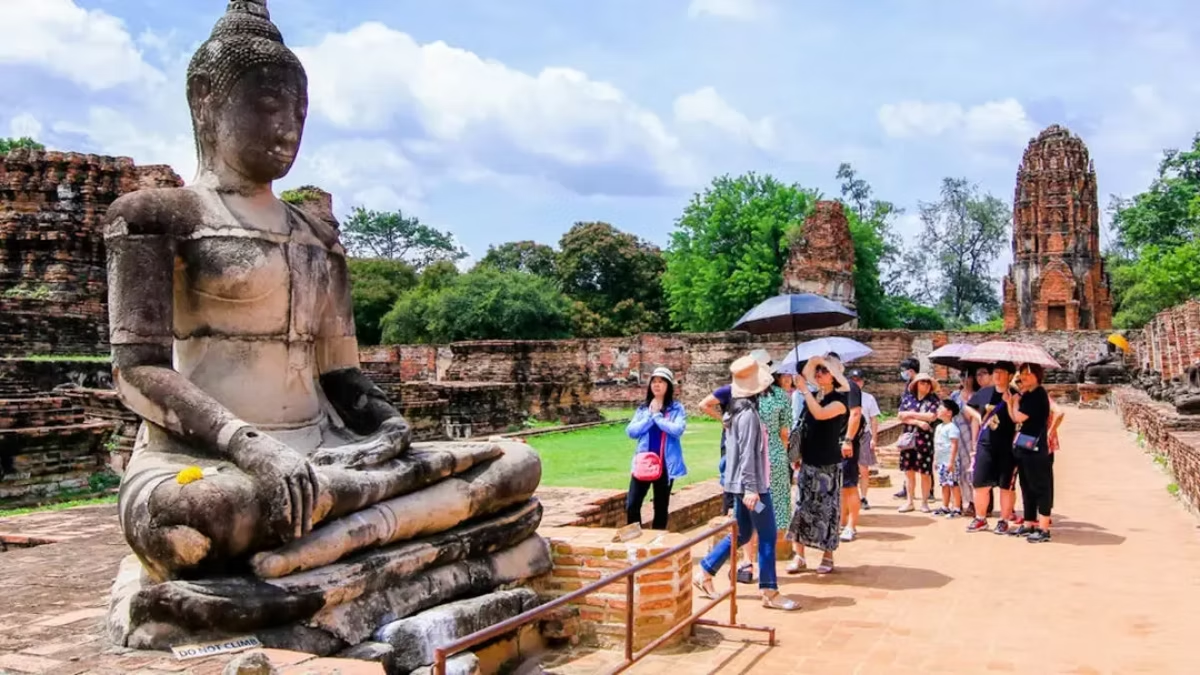
All temples within Ayutthaya Historical Park require covered shoulders and knees for all visitors, regardless of gender. Sleeveless tops, tank tops, shorts above the knee, and miniskirts are not permitted. Most sites enforce this consistently. If you arrive incorrectly dressed, sarongs are available for hire near major temple entrances. Dress correctly before leaving your accommodation — it is far easier than fixing it at the gate in the heat.
Ayutthaya Historical Park contains the ruins of temples that are still considered sacred sites by Thai Buddhists, even in their damaged state. The dress code exists not as a bureaucratic formality but as a genuine expression of respect for that continued significance. Understanding and following it before you arrive makes your day more comfortable and your visits more smooth.
This guide covers every rule in plain language, tells you exactly what to wear for a practical full day at the ruins, and explains what happens if you show up in the wrong clothes.
The Rules: What’s Required
The Ayutthaya Temple dress code requires covered shoulders and knees for all visitors. Specifically: no sleeveless tops, tank tops, strapless or crop tops, or see-through shirts; and no shorts, miniskirts, or any bottoms ending above the knee. These rules apply to all genders. Remove shoes and hats before entering any indoor chapel or building with a Buddha image. The rules are enforced at entrance gates and failure to comply results in being turned away until you cover up.
Tops:
- Must have sleeves — short or long, both are fine
- Shoulders must be fully covered
- No sleeveless tops, tank tops, spaghetti straps, or strapless tops
- No crop tops or exposed midriff
- No sheer or see-through fabric
Bottoms:
- Must cover the knees entirely — the hem must fall below the knee
- No shorts above the knee
- No miniskirts
- No ripped jeans where skin is visible at the thigh or knee
- Leggings alone are not considered appropriate at stricter sites — a skirt or shorts over leggings is fine
Both genders: These rules apply equally to men and women.
What You Need to Remove Inside Buildings
The rules above apply to the outdoor temple grounds. Additional requirements apply inside any indoor chapel or building containing a Buddha image where people are praying:
Shoes: Remove before entering. The hot stones outside are a good reason to keep shoes on across the open grounds — only remove them when entering a covered building or shrine. Look for a row of shoes outside the door — that’s your signal.
Hats: Remove before entering indoor areas or in the presence of Buddha images. Keep in hand or place in your bag.
Note on Wat Lokaya Sutha (Reclining Buddha): This is an open-air site. Shoes stay on across the grounds, but the same shoulder/knee rules apply as everywhere else.
The Special Rule at Wat Mahathat
Wat Mahathat’s famous sandstone Buddha head in tree roots carries an additional etiquette requirement specific to this site: your head must not be higher than the Buddha’s head when photographing it.
In practice, this means kneeling or sitting when taking photos at close range. Attendants at the site watch for this and will politely ask you to lower yourself. This is not arbitrary — the Buddha image is considered sacred, and positioning yourself physically above it is seen as disrespectful regardless of intent. Comply with a smile; the attendants are consistently described as polite and patient.
What Happens If You Arrive Without Correct Clothing
You will be turned away at the entrance. Staff at major temples including Wat Mahathat and Wat Phra Si Sanphet consistently enforce the dress code. You will not be allowed to enter until you cover up.
Sarongs are available for hire near most major entrances. A lightweight sarong can be wrapped around exposed legs or draped over bare shoulders for temporary coverage. You can usually hire or buy one from stalls outside the main ticket booths for 20–50 THB. However, this solution has limitations: wearing a sarong over a tank top in 35°C heat is uncomfortable, and not every entrance has stalls nearby. Sorting your clothing before you arrive is significantly easier.
Some organised tours carry backup sarongs. If you’re on a guided tour, your guide may have sarongs available. This is worth confirming before departure.
Practical Clothing for a Full Day at Ayutthaya
The challenge at Ayutthaya is satisfying two competing requirements: dressing modestly for the temples and staying comfortable in Thailand’s heat. The good news is that both are achievable with the right fabric choices.
Best approach for most visitors:
Lightweight trousers or palazzo pants in a breathable natural fabric (linen, cotton, or rayon) that fall below the knee. These are the single most practical choice — they meet the rules everywhere, provide some sun protection, and in lightweight fabric are cooler than shorts in direct sun because they prevent direct sunburn. “Elephant pants” (Thai fisherman pants) sold widely throughout Ayutthaya and Bangkok are cheap, extremely thin, and ideal.
A short-sleeved T-shirt or lightweight shirt with sleeves. Any short-sleeved top with full shoulder coverage works. Light colours (white, cream, pale blue) reflect sunlight and stay cooler than dark colours.
Slip-on sandals or shoes that can be taken off easily when entering indoor chapels. Avoid complicated lace-up boots — you’ll be removing footwear multiple times during the day.
Optional: a lightweight scarf. Useful for extra shoulder coverage if your T-shirt sleeves are borderline, and doubles as sun protection on the open grounds.
What to avoid even if technically compliant:
- Dark or black clothing absorbs heat and makes a long day at open-air ruins very uncomfortable
- Tight-fitting synthetic fabrics trap heat
- High heels — the grounds are uneven brick and ancient stone; flat, comfortable footwear is essential
What to Wear for Active Temples vs Archaeological Sites
For Ayutthaya temples, wear lightweight trousers or a long skirt (to the knee or below) and a short-sleeved or long-sleeved shirt that covers the shoulders. Light-coloured, breathable fabric is best for the heat. Flip-flops or slip-on shoes are practical since you will remove them at indoor chapels. A scarf or sarong is useful as a backup cover.
Active temples (Wat Yai Chai Mongkhon, Wat Na Phra Mane, Wiharn Phra Mongkhon Bophit): These are active places of Buddhist worship with resident monks. The dress code is enforced with slightly more attention here than at purely archaeological sites. Dress conservatively and quietly — these are functioning religious spaces, not photo backdrops.
Archaeological ruins (Wat Mahathat, Wat Phra Si Sanphet, Wat Chaiwatthanaram): The same rules apply, but the atmosphere is more relaxed. The key sites to pay attention to are those with intact indoor shrines — Wat Ratchaburana has an underground crypt where the Buddha image rules apply strictly.
Book This TourBuying Appropriate Clothing in Ayutthaya
If you arrive without temple-appropriate clothing, you can buy what you need within minutes:
Market stalls near Wat Mahathat sell lightweight cotton trousers and elephant pants for 100–200 THB. These are sold specifically because tourists arrive underprepared — the stall holders know exactly what you need.
Chao Phrom Market (near the Historical Park) has a broader selection of local clothing at similar prices.
Your accommodation. Most guesthouses can direct you to the nearest clothing vendor, or may have basic sarongs available.
Frequently Asked Questions
Can I wear shorts at Ayutthaya temples?
Only if they extend below the knee. Shorts ending above the knee are not permitted at any temple within Ayutthaya Historical Park. If your shorts are borderline, bring a sarong to wrap around your waist — this is a common and accepted workaround.
Can I wear a sleeveless top if I carry a scarf?
At most Ayutthaya temples, yes — wrapping a scarf over bare shoulders is generally accepted. However, this is less reliable than wearing a sleeved top, and at stricter sites you may still be turned away. Wearing a sleeved top is the more dependable choice.
Do men have to follow the same rules as women?
Yes. The shoulder and knee requirements apply to all visitors regardless of gender. Men in tank tops or shorts above the knee will be turned away from temple entrances.
Are there dress code rules at the open-air ruins like Wat Lokaya Sutha?
Yes. Even at open-air sites with no entrance building, the shoulder and knee rules still apply. There may not be a gate attendant checking, but the expectation remains.
What should I wear inside temple buildings?
Remove shoes and hats before entering any indoor chapel or building containing a Buddha image. Beyond that, the same shoulder and knee rules as the outer grounds.
Is there anywhere to buy appropriate clothing near the temples?
Yes. Stalls near the main entrances to Wat Mahathat and other major temples sell lightweight trousers and sarongs for 100–200 THB. You can sort out incorrect clothing on the spot, but it’s easier and more comfortable to dress correctly before leaving your accommodation.
What about the Buddha head etiquette at Wat Mahathat?
Keep your head lower than the Buddha head in tree roots when photographing it — kneel or sit. This is enforced by polite attendants and is not optional.
