

Ayutthaya Temple FAQs: Every Question Answered (2026)
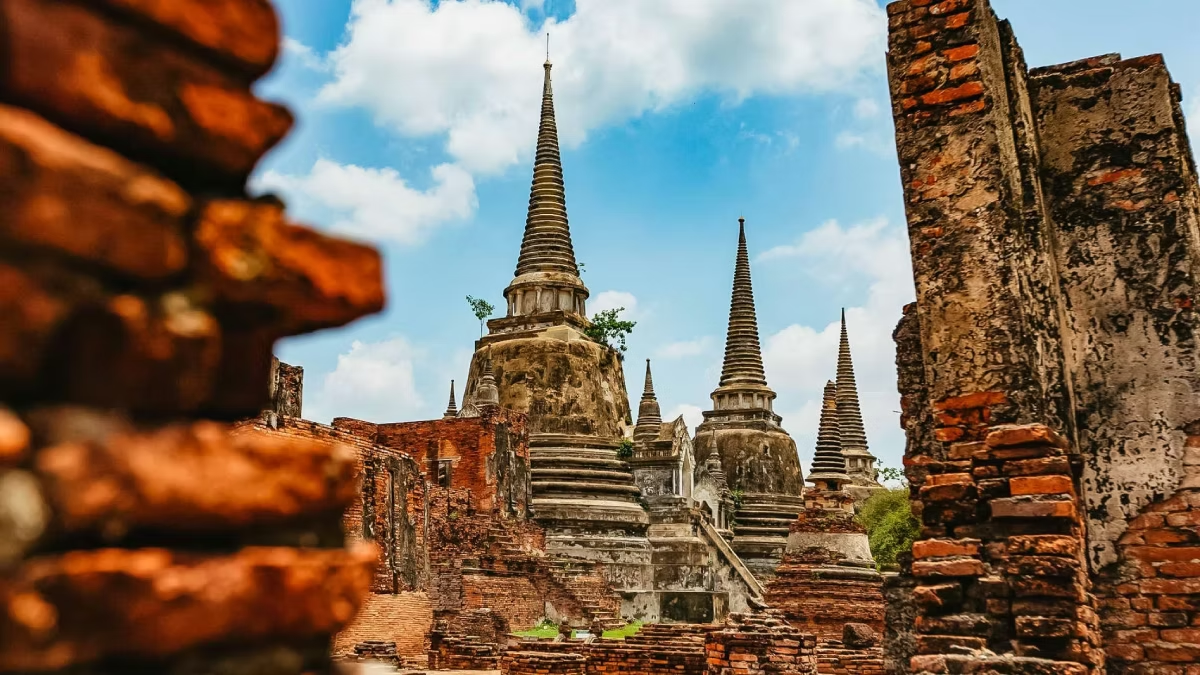
The most common questions about visiting Ayutthaya Temple in 2026: entry costs 50 THB per major temple (220 THB combo pass for six); temples open 8:00–8:30 AM and close 4:30–6:30 PM; covered shoulders and knees are required; the train from Krung Thep Aphiwat Central Terminal takes 1–1.5 hours from Bangkok; one day covers the highlights; and the most important single temple to see is Wat Mahathat with its famous Buddha head in tree roots.
This page answers every question visitors commonly ask before their trip to Ayutthaya Historical Park — organised by category for easy scanning.
Tickets and Entry
How much does it cost to enter Ayutthaya temples?
Most major temples managed by the Fine Arts Department charge 50 THB per person (foreign visitor price). A combo pass covering six temples costs 220 THB and is available at any of the six included temple entrances. Some active temples (Wat Yai Chai Mongkhon, Wat Na Phra Mane, Wiharn Phra Mongkhon Bophit) charge 20 THB. Wat Lokaya Sutha and Wat Phu Khao Thong are free. See our Ayutthaya Temple Entrance Fees guide.
What is included in the 220 THB combo pass?
The combo pass covers six temples: Wat Mahathat, Wat Ratchaburana, Wat Phra Si Sanphet, Wat Maheyong, Wat Chaiwatthanaram, and Wat Phra Ram. It is valid for 30 days, so visitors spending two days in Ayutthaya don’t need to rush all six temples into one day.
Can I buy tickets online in advance?
No. Temple entrance tickets are cash-only, purchased at each temple’s ticket booth on the day. There is no online advance booking system for individual temple entry.
Do I need exact change?
Bring small Thai Baht notes — 20s and 50s are ideal. Ticket booths, particularly in the morning, may have difficulty changing 500 or 1,000 THB notes.
Are entrance fees the same for Thai nationals and foreign visitors?
No. Thailand operates a dual-pricing system at many government-managed sites. Foreign visitors pay the standard 50 THB rate. Thai nationals pay a lower fee.
Opening Hours
What time do Ayutthaya temples open?
Most Fine Arts Department temples open at 8:00–8:30 AM. Wiharn Phra Mongkhon Bophit opens at 7:00 AM. Open-air sites like Wat Lokaya Sutha have no formal opening time.
What time do Ayutthaya temples close?
Closing times vary significantly: Wat Mahathat closes at 6:00 PM, Wat Chaiwatthanaram at 6:30 PM, but Wat Ratchaburana and Wat Phra Si Sanphet close at 4:30 PM. Plan morning visits to the 4:30 PM temples. See the full schedule in our Ayutthaya Temple Opening Hours guide.
Are Ayutthaya temples open every day?
Yes. All temples in Ayutthaya Historical Park are open seven days a week including weekends and most public holidays. The national museums (Chao Sam Phraya and Chantharakasem) are closed Mondays and Tuesdays.
What time should I arrive?
8:30 AM — when the first ticket windows open. This is the coolest part of the day, the light is best for photography, and the most popular sites are at their least crowded before Bangkok day tour groups arrive around 9:30–10:00 AM.
Getting There
How do I get to Ayutthaya from Bangkok?
Four main options: train from Krung Thep Aphiwat Central Terminal (1–1.5 hours, from 15 THB); minivan from Mo Chit Bus Terminal (1–1.5 hours, 60–100 THB); private car or taxi (1–1.5 hours, 1,200–1,800 THB one way); or an organised day tour with return transport included. See our How to Get to Ayutthaya Temple from Bangkok guide.
Which station do trains to Ayutthaya leave from in Bangkok?
Krung Thep Aphiwat Central Terminal (Bang Sue Grand Station), accessible via MRT Blue Line to Krung Thep Aphiwat station. Not Hua Lamphong, which is now only used by limited local services.
How far is Ayutthaya from Bangkok?
Approximately 80 kilometres north of Bangkok by road. Journey time is 1–2 hours depending on transport type and traffic conditions.
How do I get from Ayutthaya station to the temples?
Take the 5 THB passenger ferry from the pier across the road from the station entrance — a 2-minute crossing to the island. From there, rent a bicycle, take a tuk-tuk, or walk to the nearest temples (10–20 minutes on foot).
Book This TourGetting Around
What is the best way to get around Ayutthaya temples?
Bicycle. The island is flat, rental costs 50–80 THB per day, and cycling between temples is significantly cooler than walking in the heat. Tuk-tuks (200 THB/hour) are the best option for off-island temples like Wat Chaiwatthanaram and Wat Yai Chai Mongkhon. See Getting Around Ayutthaya Temple.
Can I walk between Ayutthaya temples?
Yes, for the central island cluster. Wat Mahathat, Wat Ratchaburana, Wat Phra Si Sanphet, Wiharn Phra Mongkhon Bophit, and Wat Lokaya Sutha are all within a roughly 3 km circuit — entirely walkable in the morning. Off-island temples like Wat Chaiwatthanaram require a bicycle or tuk-tuk.
Does Grab work in Ayutthaya?
Yes. Grab operates in Ayutthaya and offers fixed-price rides without negotiation. Availability can be limited at off-peak hours.
Dress Code
What is the dress code for Ayutthaya temples?
Covered shoulders and knees are required for all visitors regardless of gender at all temples within Ayutthaya Historical Park. Sleeveless tops, tank tops, shorts above the knee, and miniskirts are not permitted. Shoes must be removed before entering any indoor chapel or building with a Buddha image. See Ayutthaya Temple Dress Code.
What happens if I arrive dressed incorrectly?
You will be turned away at the entrance gate. Sarongs for hire or purchase are available at stalls near major temple entrances (20–50 THB) as a quick fix.
Is there a special rule at Wat Mahathat?
Yes. When photographing the famous Buddha head in tree roots, you must kneel or sit so that your head is lower than the Buddha’s. Attendants watch for this and will ask you to comply.
Planning Your Visit
How many days do I need at Ayutthaya?
One full day covers the six main temples. Two days is strongly recommended for a more comfortable pace, off-island temples, a boat tour, and the evening atmosphere. Three days suits history enthusiasts and photographers. See How Many Days Do You Need at Ayutthaya Temple.
What is the best time of year to visit Ayutthaya?
November to February — cool season with temperatures of 22–30°C and minimal rain. November offers near-identical weather to December with fewer crowds. The rainy season (June–October) is underrated for budget travellers — lower prices, fewer visitors, and dramatic photography conditions. See Best Time to Visit Ayutthaya Temple.
Is Ayutthaya worth visiting as a day trip from Bangkok?
Yes. Ayutthaya is one of the easiest and most rewarding day trips from Bangkok — 1–2 hours travel each way and a full day on the ground covers all the major temples. Staying overnight adds significant value for those with time.
Is Ayutthaya safe?
Yes. Ayutthaya is consistently rated very safe for visitors. The primary risks are practical: heat, sunburn, and uneven terrain. See Ayutthaya Temple Travel Tips.
The Temples
Which is the most important temple in Ayutthaya?
Wat Mahathat — the former residence of the Supreme Patriarch of Thai Buddhism and home to the famous sandstone Buddha head entwined in Banyan tree roots. If you can visit only one temple, this is it.
Which temple is best for sunset?
Wat Chaiwatthanaram — a Khmer-style riverside temple on the western bank that faces directly into the setting sun. The late afternoon and dusk lighting is exceptional here. It closes at 6:30 PM.
Which temple has the reclining Buddha?
Wat Lokaya Sutha, in the western section of the central island. The reclining Buddha is 42 metres long and 8 metres high, set in an open-air field. Free to enter, no formal closing time.
What is the temple with the Buddha head in tree roots?
Wat Mahathat, in the central island. The sandstone Buddha head, believed to have been severed during the Burmese invasion of 1767 and gradually overgrown over centuries, is the most photographed image in Ayutthaya. Entrance fee: 50 THB (included in combo pass). Opens 8:30 AM, closes 6:00 PM.
Which temple is most like Angkor Wat?
Wat Chaiwatthanaram, built in 1640 in Khmer architectural style with a central prang surrounded by four corner prangs and galleries — a layout modelled on the Khmer concept of Mount Meru. The architectural influence from Cambodia is intentional and direct.
Is Wat Ratchaburana worth visiting?
Yes. Wat Ratchaburana is often overlooked because it sits directly next to the more famous Wat Mahathat, but it has a well-preserved main prang (rare in Ayutthaya) with a climbable staircase inside and a crypt containing restored murals. One of the most architecturally interesting temples in the park.
Practical Matters
Do I need to carry cash at Ayutthaya temples?
Yes. All temple ticket booths are cash-only. Carry Thai Baht in small denominations (20s and 50s) before entering the park.
Are there toilets at Ayutthaya temples?
Yes at most major temples. A small fee (5–10 THB) may be charged. Bring tissue — it is not always provided.
Is there food and water available inside the park?
Convenience stores and vendors operate near major temple entrances. Carry your own water (at least 1.5 litres per person) for any extended visit — don’t rely solely on vendors.
Can I take photographs at Ayutthaya temples?
Yes. Photography is permitted throughout the Historical Park. Flash is generally prohibited inside indoor chapels. Drones require prior permission from the Fine Arts Department.
Is Ayutthaya accessible for visitors with disabilities?
The park has uneven terrain, ancient brick paths, and no dedicated wheelchair infrastructure at most temples. Some sites are more manageable than others. A private tuk-tuk with a driver who can drop you close to each entrance is the most practical approach for mobility-limited visitors.
How do I pronounce Ayutthaya?
Approximately: ah-YUT-tah-yah. The most common pronunciation guide is “eye-yoot-hiya” — close enough for most practical purposes.
