

Wat Phu Khao Thong Ayutthaya: Complete Temple Guide (2026)
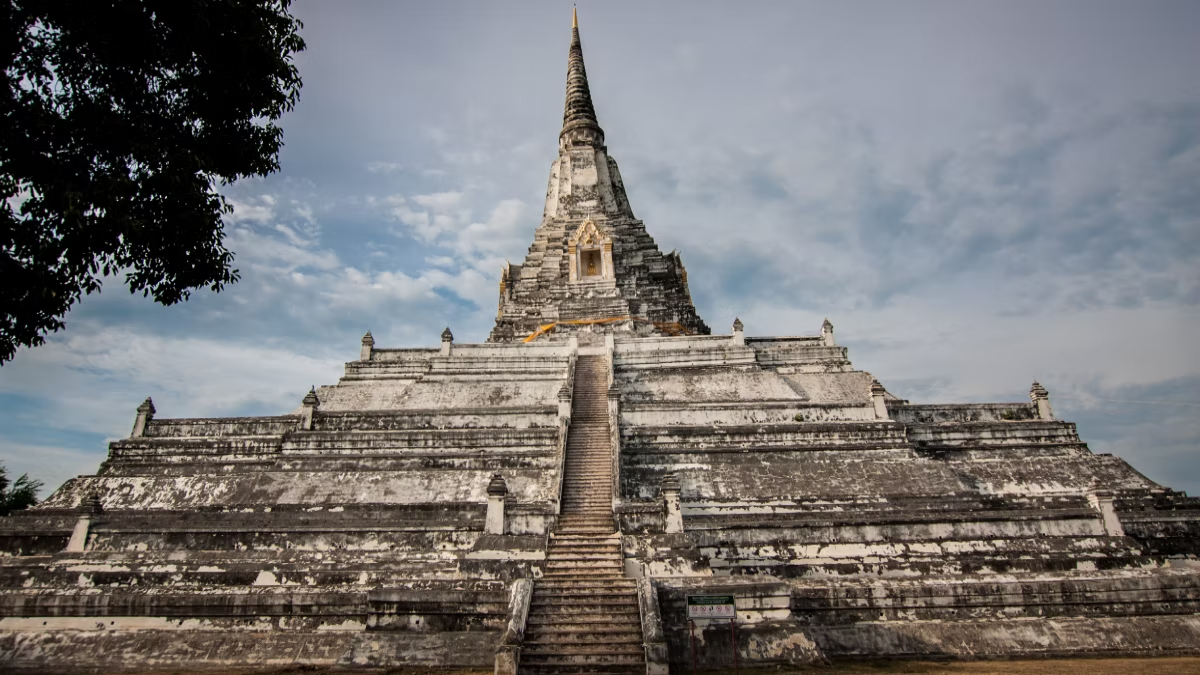
Wat Phu Khao Thong, known as the Golden Mount, is one of Ayutthaya’s most unusual temples — its towering white chedi was originally begun by the Burmese during their occupation of Ayutthaya in 1569, left unfinished, and later completed by Thai kings who rebuilt it in a Thai style atop the original Burmese base. The result is a uniquely hybrid structure that literally embodies the conflict between the two kingdoms. It is free to enter, rises approximately 50 metres, and offers the best panoramic views in Ayutthaya from its upper platform.
Most temples in Ayutthaya tell the story of what the Siamese kingdom built. Wat Phu Khao Thong tells a different story — what happened when Ayutthaya fell to its enemies, and how the Thais reclaimed that symbol and made it their own. The chedi visible today began as a Burmese victory monument, was left unfinished when the Thais expelled their occupiers, was later rebuilt by Thai kings in a different style atop the same base, and now stands as one of Ayutthaya’s most prominent and serene landmarks. That layered history is visible in the structure itself — the lower Burmese section and the upper Thai spire tell two stories in one monument.
Quick Facts
Wat Phu Khao Thong (Monastery of the Golden Mount) is an active temple north of the Ayutthaya island, famous for its 50-metre white chedi whose base was begun by Burmese King Bayinnaung after his 1569 conquest of Ayutthaya and later completed in Thai style by King Boromakot in the mid-18th century. A 2.5-kilogram gold ball was placed atop the chedi in 1956 to commemorate 2,500 years of Buddhism. Admission is free. The temple is open daily with no formal closing time; the chedi platform provides panoramic views over the Ayutthaya countryside.
| Detail | Information |
|---|---|
| Thai name | วัดภูเขาทอง |
| Translation | Monastery of the Golden Mount |
| Original base | 1569, begun by Burmese King Bayinnaung |
| Rebuilt | Mid-18th century by King Boromakot |
| Location | North of the central island (off-island), ~3 km from Wat Mahathat |
| Entrance fee | Free |
| Opening hours | No formal closing time (open-air site) |
| Status | Active temple |
| Time to allow | 20–40 minutes |
| Best time to visit | Early morning (sunrise) or late afternoon |
History
The story of Wat Phu Khao Thong’s chedi is one of the most politically resonant in all of Ayutthaya, and understanding it makes visiting the site far more meaningful than simply climbing a white tower.
The site before 1569: A temple existed here before the Burmese occupation. The site had been an important religious location during the Ayutthaya Kingdom, likely since the 14th century, used as both a place of worship and a strategic high point for surveying the surrounding flat plains.
The Burmese occupation (1569): In 1569, the Burmese King Bayinnaung led a successful siege of Ayutthaya, capturing the city for the first time in its history. To mark his victory, Bayinnaung ordered the construction of a large Mon-Burmese style chedi on this site — a common practice for victorious rulers, who would build a religious monument to claim their conquest through sacred architecture as well as military force.
However, Bayinnaung returned to his capital in Burma before the chedi was completed. His vassal in Ayutthaya, facing a population that had not accepted the conquest, had neither the interest nor the resources to finish a monument to Burmese victory. The base was constructed but the chedi remained unfinished.
Siamese reclamation (1590 onward): When King Naresuan the Great expelled the Burmese and restored Siamese independence in 1590, the unfinished Burmese chedi base presented a problem: Buddhist law prohibited tearing down a religious structure, even one built by enemies. The Thais could not destroy it; they could only absorb it.
Over the following decades, the structure gradually deteriorated. The unfinished base — a reminder of an occupation that had ended — was eventually largely reclaimed by vegetation.
Thai reconstruction: By the mid-18th century, during the reign of King Boromakot, the old base was used as the foundation for a new Thai-style chedi. Rather than beginning from scratch, Boromakot built a new Thai spire atop the existing Burmese base — literally layering Siamese architecture over Burmese, completing what Bayinnaung had left unfinished but on Thai terms and in Thai form.
In 1956, to commemorate 2,500 years of Buddhism, a golden ball weighing 2.5 kilograms was placed inside the finial at the very top of the chedi, giving it the name Golden Mount.
Book This TourWhat to See at Wat Phu Khao Thong
The chedi: The visual centrepiece — a slender white tower rising approximately 50 metres from a broad multi-tiered base. The lower portion reflects the Mon-Burmese architectural heritage of the original construction; the upper Thai spire represents the transformation Boromakot oversaw. The hybrid nature of the structure is visible if you know what to look for: the square terraced base with indented corners is characteristic of Mon-Burmese form, while the tapering spire above is distinctly Thai.
The climb: Steep stairs on all four sides lead up the base terraces to a platform that offers the best panoramic views available in Ayutthaya. From here, the flat Ayutthaya landscape stretches in all directions — you can see the main island temples, the rivers, the modern town, and the paddyfields and countryside that surround the ancient city. It is the only elevated viewpoint in the Ayutthaya area. The climb requires some effort; take it slowly in the heat.
The statue of King Naresuan: A large modern statue of King Naresuan the Great stands on the approach road to the temple — a reminder of the king most associated with Ayutthaya’s resistance to Burmese occupation, whose name and image appear throughout this part of Thailand.
The grounds: The temple is active — monks reside here, though with very few in residence. The grounds are quiet and much less visited than the main island temples, giving Wat Phu Khao Thong a contemplative atmosphere that the more popular sites cannot offer.
Practical Visitor Information
Free admission. Wat Phu Khao Thong is one of two major Ayutthaya sites that charge no entrance fee (the other is Wat Lokaya Sutha). There are no ticket booths or formal opening times.
Off the main island. The temple is approximately 3 kilometres north of the Historical Park centre, across the Lopburi River. From the central island, it is a 15-minute bicycle ride or a short tuk-tuk trip. Best reached as a deliberate excursion rather than as part of the main island circuit.
Combine with a second visit. The temple pairs well with Wat Na Phra Mane (also north of the island) for a northern excursion that covers both without significant extra travel.
The hill is exposed. Bring water, a hat, and sunscreen. There is almost no shade on the climb or at the platform. Visit in the early morning or late afternoon to avoid the worst heat.
Active temple etiquette. Despite being less visited, this is a functioning monastery. Dress with covered shoulders and knees, speak quietly, and treat the space with the respect due an active place of worship.
Best Time to Visit
Sunrise: Wat Phu Khao Thong is one of the very few sites in Ayutthaya where sunrise is achievable — the free admission and absence of formal opening times means you can be at the platform before the day tours from Bangkok start moving. The view over the flat countryside in early morning light is genuinely special.
Late afternoon: The white chedi catches warm late-afternoon light from the west. The views from the platform at this time — over the Ayutthaya island and the rivers — are the best in the area.
Frequently Asked Questions
Why is it called the Golden Mount?
In 1956, a 2.5-kilogram solid gold ball was placed inside the finial at the top of the chedi to commemorate 2,500 years of Buddhism. The name Golden Mount (Phu Khao Thong) has been associated with the site since King Naresuan’s era.
Did the Burmese really build part of this temple?
Yes. The base of the chedi visible today incorporates the unfinished Mon-Burmese foundation begun on the orders of King Bayinnaung after his 1569 conquest of Ayutthaya. Thai kings later built a Thai-style chedi atop this base rather than destroying it, as Buddhist law prohibited demolishing religious structures.
Can I climb to the top?
You can climb to a platform near the top of the base tier — not to the very tip of the spire. The platform offers panoramic views. The upper finial is not accessible to visitors.
Is there an entrance fee?
No. Wat Phu Khao Thong is free to enter.
How crowded is it?
Significantly less crowded than the main island temples. Wat Phu Khao Thong is off the main tourist circuit and many day-trippers from Bangkok don’t include it on their itinerary. You may have the climb largely to yourself, particularly in the morning.
