

Wat Na Phra Mane Ayutthaya: Complete Temple Guide (2026)
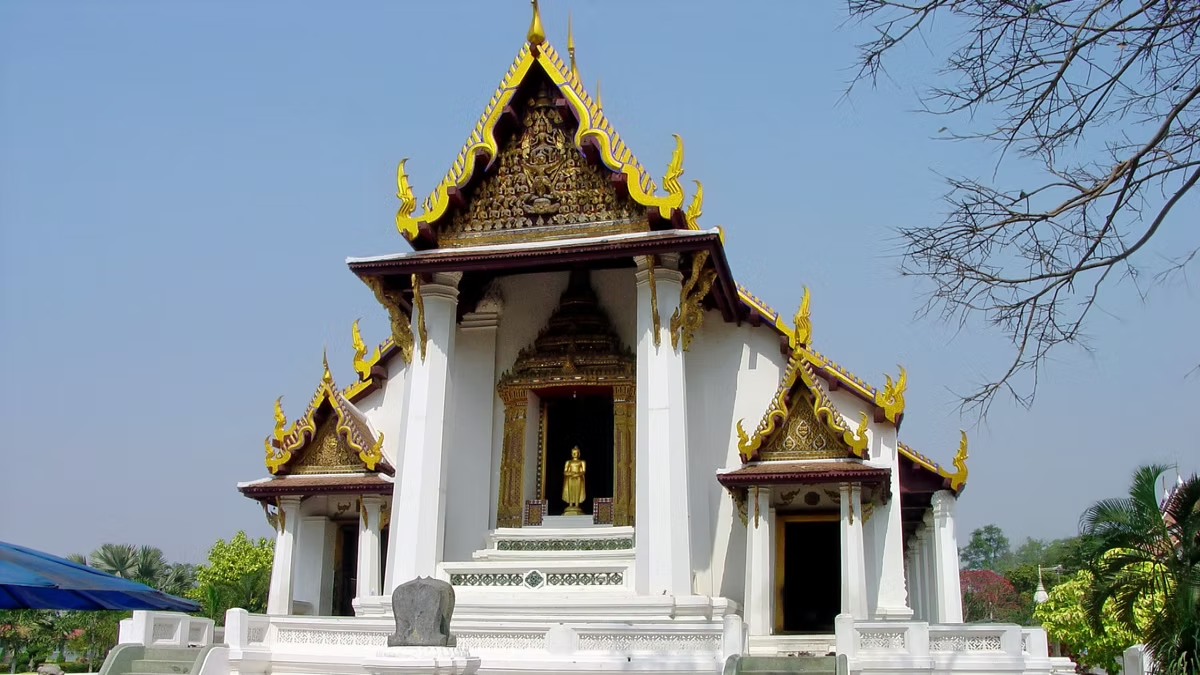
Wat Na Phra Mane is the only temple in Ayutthaya that was not destroyed by the Burmese in 1767 — and it shows. Where every other major temple in the city is a ruin, Wat Na Phra Mane retains its original ordination hall, its magnificent 6-metre crowned bronze Buddha image, and an ancient Dvaravati-style stone Buddha that may be over 1,500 years old. It is free to enter, sits just north of the island across the Lopburi River, and receives far fewer foreign visitors than it deserves. Entrance costs 20 THB; opens at 8:00 AM and closes at 5:00 PM.
Every temple in Ayutthaya that stands in ruins today was destroyed in the same event: the Burmese siege and sacking of 1767. Every temple, that is, except one. Wat Na Phra Mane survived — its ordination hall intact, its Buddha images unmolested, its original Ayutthaya-period structure preserved in a way that nothing else in the city can match. To stand inside the ubosot here and look up at the crowned bronze Buddha is to see Ayutthaya as it actually was, rather than imagining it from fragments.
Quick Facts
Wat Na Phra Mane (also written Wat Na Phra Men) is an active temple north of the Ayutthaya island, notable as the only temple in Ayutthaya that survived the Burmese destruction of 1767. It was built in 1503 during the reign of King Ramathibodi II and restored in the 17th century by King Prasat Thong. The principal Buddha image is a 6-metre-high crowned bronze figure in royal attire. The temple also houses a Dvaravati-period stone Buddha believed to be over 1,500 years old. Entrance costs 20 THB. Opens 8:00 AM, closes 5:00 PM.
| Detail | Information |
|---|---|
| Thai name | วัดหน้าพระเมรุ |
| Translation | Monastery in Front of the Funeral Pyre |
| Built | c. 1503, restored 17th century |
| Location | North of the island, across Lopburi River |
| Entrance fee | 20 THB |
| Opening hours | 8:00 AM – 5:00 PM daily |
| Status | Active monastery |
| Time to allow | 20–35 minutes |
| Best time to visit | Any time during opening hours |
History
The founding and name: Wat Na Phra Mane was built in 1503 during the reign of King Ramathibodi II on a site believed to be in front of a royal cremation ground — the name literally translates as “Monastery in Front of the Funeral Pyre.” The temple served as a significant royal site throughout the Ayutthaya period, directly opposite the Grand Palace across the river.
The 1760 siege and the cannon story: In 1760, the Burmese King Alaungpaya led an army to besiege Ayutthaya. His forces positioned themselves at Wat Na Phra Mane — the temple being directly across the river from the Royal Palace — and used it as their artillery base, firing cannons across the water at the palace compound. According to legend and several historical accounts, a cannon exploded or misfired while the Burmese king himself was present, mortally wounding him. The Burmese withdrew without taking the city on that occasion.
The significance of this event for the temple’s survival in 1767 comes from a Thai belief that the Burmese army, when it returned seven years later to finally destroy Ayutthaya, avoided Wat Na Phra Mane out of superstition — the temple where their king had been wounded or killed was not a place they wanted to enter again. Whether this is historically accurate or a retrospective narrative that makes sense of the temple’s survival is debated, but the result is clear: while every other major temple in the city was burned and looted, Wat Na Phra Mane was left intact.
Further history: The most commonly cited explanation is simply that the Burmese used the temple as their military headquarters — soldiers don’t usually burn their own base. Whatever the reason, the temple remained standing and was subsequently maintained through the Bangkok period with renovations during the reign of King Rama III.
Book This TourWhat to See at Wat Na Phra Mane
The ordination hall (ubosot): This is the main reason to visit. The ubosot dates to 1503 and was restored in the 17th century by King Prasat Thong. Its octagonal interior columns topped with lotus capitals are in the classic Ayutthaya style — the only fully intact example of this architecture visible anywhere in Ayutthaya. The gabled roof is decorated with Vishnu mounted on Garuda perched above Rahu, flanked by nagas and devas — an extraordinary piece of Ayutthaya-period temple decoration that survived only because the building around it was never destroyed.
The crowned bronze Buddha: Inside the ubosot, a 6-metre-high seated bronze Buddha in the subduing-Mara mudra wears a royal headdress (crown) and royal attire adorned with detail that is extremely rarely seen on large Buddha images in Thailand. Buddha images depicted as kings — with royal regalia — are associated with the Ayutthaya Kingdom’s fusion of divine and royal authority. The image’s full name, Phra Buddha Nimitr Vichit Maramoli Sisanpeth Boromtrailokanat, was given by King Rama III. Stand before it and you are looking at Ayutthaya-period craftsmanship intact — not restored or reconstructed, simply preserved.
The Dvaravati stone Buddha: In a smaller viharan beside the ubosot is an ancient stone Buddha image in the European (chair) posture — seated in a chair with both feet planted on the ground rather than cross-legged. This posture is extremely unusual in Thai Buddhist iconography and indicates Dvaravati-period origin, placing the image somewhere between the 6th and 11th centuries CE. The image is believed to have been moved to Ayutthaya from Nakhon Pathom at some point. Estimated age: over 1,500 years, making it one of the oldest Buddhist images accessible to visitors in Thailand.
Why This Temple Matters
In a city of ruins, Wat Na Phra Mane provides the only answer to the question: what did these temples actually look like when they were intact?
The other temples of Ayutthaya must be imagined — you read their foundations and ruined walls and try to reconstruct their original form. At Wat Na Phra Mane, you see it directly. The proportions of the ordination hall, the height of the ceiling, the arrangement of the columns, the scale of the Buddha image in relation to the space — all of this is observable rather than theoretical. For visitors with a serious interest in Ayutthayan art and architecture, this temple is more valuable than any amount of photogenic ruins.
Practical Visitor Information
Off the main island — plan accordingly. Wat Na Phra Mane sits north of the island across the Lopburi River (now Khlong Khu Mueang). From Wat Mahathat, it is approximately 1 kilometre by road — a 10-minute cycle or tuk-tuk ride across the bridge.
20 THB entrance fee. This is the modest fee for an active temple rather than the standard Fine Arts Department archaeological site rate.
Closes at 5:00 PM. Plan to arrive before 4:30 PM for a comfortable visit.
Receives few foreign tourists. This is the temple that most day-trippers miss because it is slightly off-route. The quiet atmosphere — you may have the interior to yourself — is part of the experience.
Remove shoes before entering the ubosot. This is an active temple with a sacred principal image.
Best Time to Visit
Any time during opening hours is suitable — the interior of the ubosot does not depend on external light and can be visited at any point in the day. Cooler morning hours are more comfortable for the cycle or tuk-tuk ride to reach it.
Frequently Asked Questions
Why did Wat Na Phra Mane survive the Burmese invasion?
The Burmese used the temple as their military headquarters during the 1767 siege, which likely explains why it was not burned with the rest of the city. The legend of their king being mortally wounded there in 1760 adds the additional layer of superstition that may have kept soldiers away from the building.
What is the crowned Buddha at Wat Na Phra Mane?
A 6-metre-high seated bronze Buddha wearing a royal crown and royal attire — a form of Buddha image associated with the Ayutthaya Kingdom’s concept of the monarch as a sacred ruler. It is one of the finest examples of late Ayutthaya bronze work accessible to visitors.
What is the old stone Buddha in the small viharan?
A Dvaravati-period seated Buddha in the European (chair-seated) posture, believed to be over 1,500 years old. This posture is extremely unusual in Thailand and is associated with the Mon Dvaravati culture that preceded the Thai kingdoms.
Is Wat Na Phra Mane worth visiting?
Yes — strongly. It is the only place in Ayutthaya where you can see an intact Ayutthaya-period ordination hall with its original architectural and sculptural elements preserved. For visitors interested in Thai art history, it is arguably the most important site in the city.
