

Wat Ratchaburana Ayutthaya: Complete Temple Guide (2026)
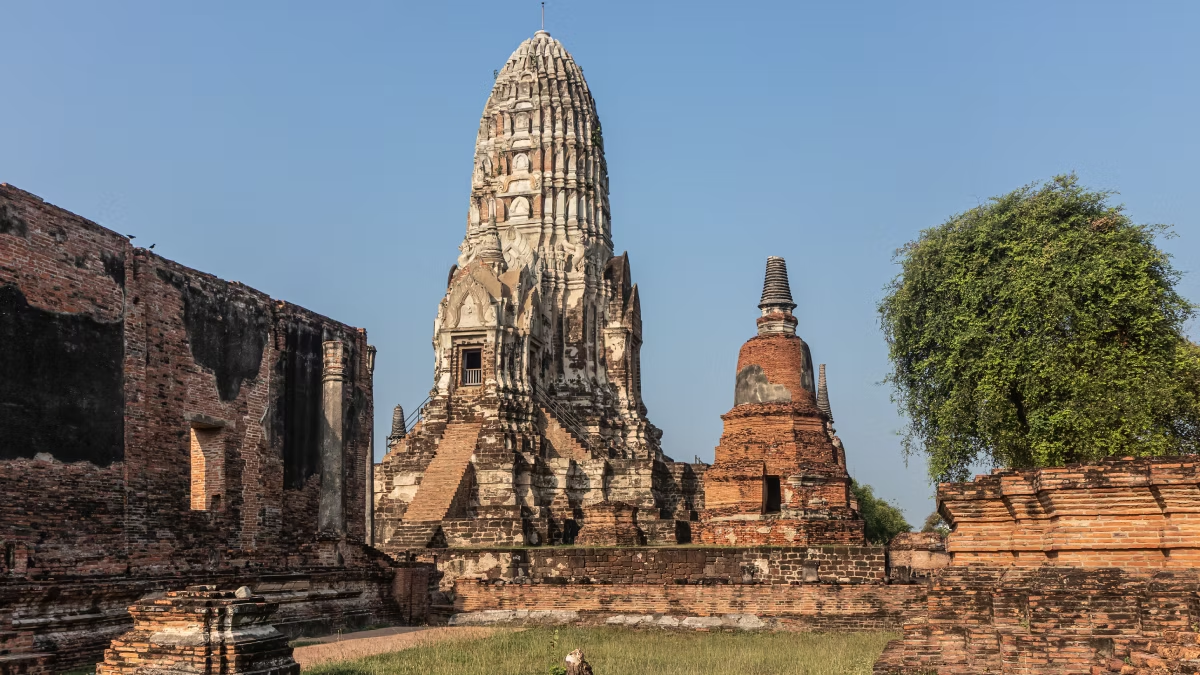
Wat Ratchaburana is Ayutthaya’s most architecturally distinctive temple for visitors who want something beyond photography — its main prang is the best-preserved in the entire Historical Park, its underground crypt contains 15th-century mural paintings (among the oldest surviving in Thailand), and its founding story is one of the most dramatic in the Ayutthaya chronicles. Built in 1424 to commemorate two princes who killed each other in a duel for the throne, it stands directly opposite Wat Mahathat. Entrance costs 50 THB; it opens at 8:00 AM and closes at 4:30 PM.
Wat Ratchaburana is the temple that rewards those who look beyond the obvious. Most visitors arrive next door at Wat Mahathat, photograph the famous Buddha head in tree roots, and only glance at Ratchaburana on the way out. The ones who enter — who climb the steep steps into the central prang, descend into the hot, tight, underground crypt, and stand before the faded 15th-century murals on the walls — leave having seen something that almost no other temple in Southeast Asia can match: mural paintings from 600 years ago, still visible, still legible.
Quick Facts
Wat Ratchaburana (Temple of Royal Restoration) was founded in 1424 by King Borommarachathirat II (Chao Sam Phraya) on the site where his two elder brothers were cremated after killing each other in an elephant duel for succession to their father’s throne. Its central prang is the best-preserved major prang in Ayutthaya, featuring original stucco carvings of Garuda and naga. The underground crypt contains 15th-century murals — among the oldest surviving in Thailand — and once held approximately 100 kilograms of gold artefacts, most of which were stolen in a 1957 heist. Entrance costs 50 THB. Opens 8:00 AM, closes 4:30 PM.
| Detail | Information |
|---|---|
| Thai name | วัดราชบูรณะ |
| Translation | Temple of Royal Restoration |
| Built | 1424, King Borommarachathirat II |
| Location | Central island, directly north of Wat Mahathat |
| Entrance fee | 50 THB (included in 220 THB combo pass) |
| Opening hours | 8:00 AM – 4:30 PM daily |
| Time to allow | 30–50 minutes |
| Best time to visit | Morning or late afternoon |
History: The Story Behind the Temple
In 1424, King Intharacha — the sixth king of Ayutthaya — lay dying. He had three sons. The two eldest, Princes Ay and Yi, could not wait for their father to name a successor. They clashed outside the city in an extraordinary event: both princes mounted war elephants and fought each other in single combat for the right to the throne. Both died of their wounds.
Their younger brother, Chao Sam Phraya, became king — inheriting a throne that had just been purchased with his brothers’ lives. His first act was to cremate his brothers at the site of their combat and build a temple there in their memory. The temple he ordered — Wat Ratchaburana — was conceived as both a memorial and an act of merit-making: a visible, permanent expression of a king coming to terms with how he came to power.
The name itself, typically translated as Temple of Royal Restoration, reflects the spirit of a reign that began with fratricide and sought redemption through piety. King Borommarachathirat II (Chao Sam Phraya) would go on to rule for 26 years and is credited with significant expansion of the Ayutthaya Kingdom, including the conquest of Angkor in Cambodia in 1431.
Book This TourThe Prang: The Best-Preserved in Ayutthaya
Wat Ratchaburana’s central prang is the finest surviving example of early Ayutthaya-period Khmer-influenced tower architecture in the Historical Park. While most Ayutthaya prangs have been reduced to stripped brick cores by centuries of erosion, looting, and the 1767 destruction, Ratchaburana’s prang retains significant areas of its original stucco decorative programme.
On the exterior, look for:
Garuda swooping on naga: The mythological conflict between Garuda (the divine eagle, vehicle of Vishnu) and naga (the serpent) is one of the most common motifs in Ayutthaya’s decorative vocabulary. At Wat Ratchaburana, these carvings survive in unusually good condition on sections of the prang’s exterior.
Mythological creatures and lotus: The full stucco programme originally covered the prang with a dense composition of deities, mythological figures, and floral motifs. Much has eroded, but the surviving sections give a clear sense of what these towers looked like at their peak.
Four Sri Lankan-style chedis: The four corner chedis flanking the main prang are in the Sri Lankan bell-shaped style — reflecting Ayutthaya’s connection to the Theravada Buddhist tradition centred in Ceylon.
Visitors can climb the steep exterior staircase on the prang’s eastern face to the prayer chamber partway up — the elevated prayer room that lay Buddhist devotees would have used. This is not a crypt visit; it is the public religious space of the original temple.
The Crypt: Murals and the Great Heist
Below the prayer chamber, accessible by a steep narrow staircase, is the sealed crypt — the chamber where the temple’s most sacred relics and greatest treasures were stored.
The murals: The crypt walls are painted with 15th-century murals depicting the Buddhist cosmos — demons and deities, scenes from the life of the Buddha, cosmological diagrams. These are among the oldest surviving mural paintings from the Ayutthaya period. They are faded, damaged, and only partially legible, but their survival across 600 years is remarkable.
The 1957 heist: The crypt remained sealed and largely unknown until the Fine Arts Department announced excavations at Wat Mahathat in 1956. When significant gold artefacts were found there, a group of thieves drew the logical conclusion that Wat Ratchaburana’s prang — directly across the road, built by the same dynasty — might contain similar treasures.
In 1957, a large group broke into the sealed crypt. They were not wrong: the Fine Arts Department’s records suggest the crypt originally contained approximately 100 kilograms of gold artefacts — royal regalia, Buddha images, golden tablets, amulets, and a stone casket containing a Buddha relic. The thieves were partially caught: one was arrested at a local market while wearing a gold crown and carrying a gold sword. Ultimately less than 20% of the stolen items were recovered. What was retrieved — along with the contents found in a separate crypt at Wat Mahathat — is now on display at the Chao Sam Phraya National Museum, a short walk from the temple.
The crypt visit today: The staircase into the crypt is steep and narrow. The space is hot, dark, and tight. Bring a small torch if you have one. The murals are on the walls of the inner chambers; give your eyes time to adjust to the low light before dismissing what you see as bare brick.
Practical Visitor Information
Note the 4:30 PM closing time. Like Wat Phra Si Sanphet, Wat Ratchaburana closes at 4:30 PM — not 6:00 PM. Plan your visit for the morning.
Visit alongside Wat Mahathat. The two temples are directly opposite each other on Naresuan Road — 2 minutes’ walk apart. Start at Wat Mahathat (buy the combo pass), cross the road to Wat Ratchaburana, and you have covered the two most historically concentrated sites in central Ayutthaya in a single morning block.
The prang climb. The steps are steep. Take them slowly, particularly in the heat. Footwear that provides grip is recommended.
The crypt. It is narrow, hot, and dark. Claustrophobic visitors should consider whether they want to descend. Those who do will see 15th-century mural paintings that very few visitors properly stop to look at.
Combo pass. Covered by the 220 THB combo pass purchased at Wat Mahathat. If you’re buying the pass, include Ratchaburana in your morning circuit.
Best Time to Visit
Morning (8:00–9:30 AM): The eastern face of the prang catches the best light in the morning, and the site is less crowded before Bangkok day tours arrive. The crypt is cooler — marginally — in the morning than at midday.
Late afternoon (3:00–4:00 PM): Good light and thinning crowds, but remember the 4:30 PM closing. Allow at least 30 minutes for a proper visit.
Frequently Asked Questions
What happened to the gold at Wat Ratchaburana?
In 1957, thieves broke into the sealed crypt under the main prang and stole an estimated 100 kilograms of gold artefacts. Less than 20% was recovered. What was retrieved is displayed at the Chao Sam Phraya National Museum in Ayutthaya.
Can I enter the crypt?
Yes. A steep narrow staircase leads from the prang’s prayer chamber down to the crypt levels. The space is hot, tight, and dark. The faded 15th-century murals on the crypt walls are the reward.
Why was Wat Ratchaburana built?
King Borommarachathirat II (Chao Sam Phraya) built it in 1424 on the site where his two elder brothers were cremated after killing each other in an elephant duel for the royal succession. It was both a memorial and an act of religious merit.
Is this temple included in the combo pass?
Yes. The 50 THB entrance fee is covered by the 220 THB combo pass, which should be purchased at Wat Mahathat across the road.
Why does Wat Ratchaburana close at 4:30 PM?
It is one of the Fine Arts Department temples with an earlier closing time than some other major sites. Plan your visit for the morning.
