

Wat Yai Chai Mongkhon Ayutthaya: Complete Temple Guide (2026)
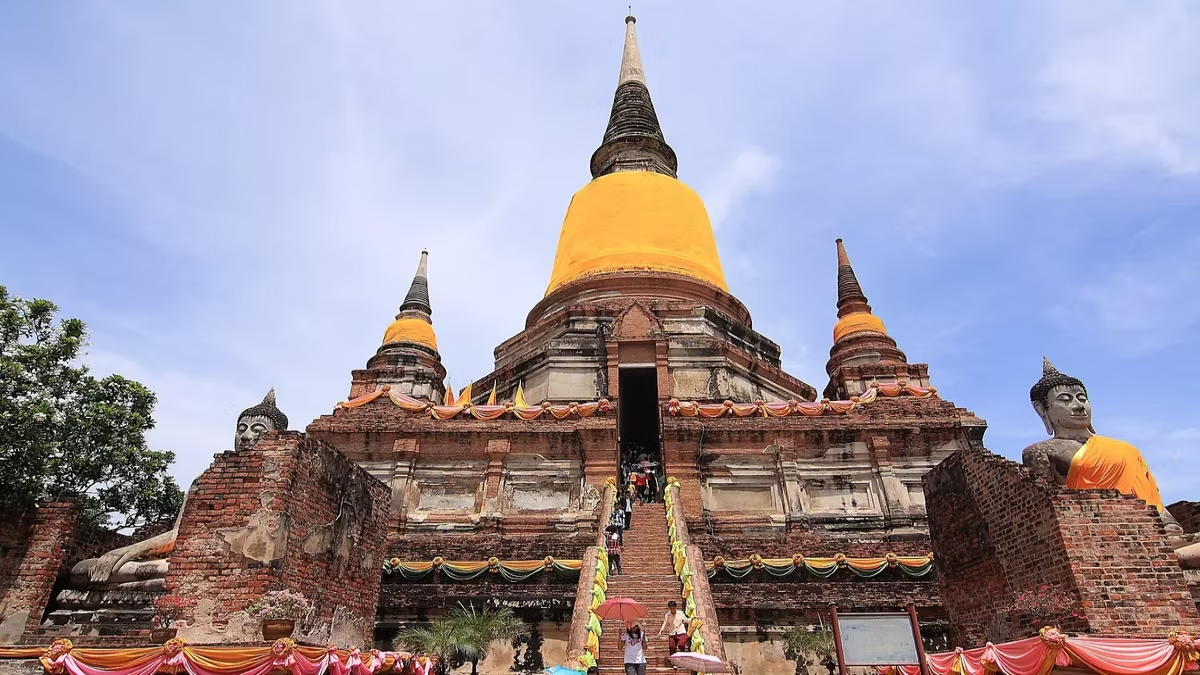
Wat Yai Chai Mongkhon (Great Monastery of Auspicious Victory) is one of Ayutthaya’s oldest and most alive temples — founded in 1357 by King U-Thong and still an active monastery today, with resident monks, maintained gardens, and an atmosphere of lived devotion that purely archaeological sites lack. Its massive bell-shaped chedi, built by King Naresuan to commemorate his legendary elephant-back duel victory over the Burmese Crown Prince in 1592, is one of the tallest structures in Ayutthaya. Entrance costs 20 THB; it opens at 8:00 AM and closes at 5:00 PM.
Where most Ayutthaya temples are silent ruins managed by the Fine Arts Department, Wat Yai Chai Mongkhon is a living monastery. Monks live here. The grounds are maintained. Incense burns. Devotees come to pay respects to King Naresuan, one of Thailand’s most revered monarchs, whose victory monument rises above everything else at the site.
That combination — ancient history, active devotion, and a truly imposing chedi that dominates the eastern approach to Ayutthaya — makes this one of the most rewarding temples in the park, and one that carries a different emotional register from the purely archaeological sites on the main island.
Quick Facts
Wat Yai Chai Mongkhon was founded in 1357 by King U-Thong (Ramathibodi I), the first king of Ayutthaya, as a monastery for monks returning from ordination in Sri Lanka. Originally called Wat Pa Kaeo, it was renamed after King Naresuan built a great victory chedi (Chedi Chai Mongkhon) here in 1592 to commemorate his elephant-back duel victory over the Burmese Crown Prince. The temple is still active, with resident monks. Entrance costs 20 THB. Opening hours are 8:00 AM to 5:00 PM daily.
| Detail | Information |
|---|---|
| Thai name | วัดใหญ่ชัยมงคล |
| Translation | Great Monastery of Auspicious Victory |
| Founded | 1357, King U-Thong (Ramathibodi I) |
| Chedi built | 1592, King Naresuan the Great |
| Location | Southeast of the central island (off-island) |
| Entrance fee | 20 THB |
| Opening hours | 8:00 AM – 5:00 PM daily |
| Status | Active monastery (resident monks) |
| Time to allow | 30–45 minutes |
| Best time to visit | Early morning or late afternoon |
History
The founding (1357): Wat Yai Chai Mongkhon was established just seven years after King U-Thong founded Ayutthaya itself. The king built it to house a group of monks who had returned from ordination in Ceylon (Sri Lanka), where they had studied under the teacher Phra Wanratana Mahathera. These monks followed a strict forest tradition of Buddhist practice. The temple was originally named Wat Pa Kaeo — Temple of the Crystal Forest — and became an important centre of meditative Buddhism and the residence of the Supreme Patriarch of the forest sect.
King Naresuan and the elephant duel (1592): The event that gave the temple its current name is one of the most famous stories in Thai history. In 1592, during the Battle of Nong Sarai, King Naresuan rode out on his war elephant and challenged the Burmese Crown Prince Minchit Sra to single combat. The two engaged in a duel on elephant back — a form of royal combat — and Naresuan killed the Burmese prince with his spear (or sword, depending on the account). The Burmese army, having lost their commander and crown prince, withdrew.
The victory was not just military but symbolic: it ended the period of Burmese dominance over Ayutthaya that had lasted since 1569, and established Naresuan as the king who restored Siamese sovereignty. To commemorate the victory, Naresuan ordered a great chedi built at Wat Pa Kaeo, naming it Chedi Chai Mongkhon — the Chedi of Auspicious Victory. The temple took this name and has borne it ever since.
Later history: The Burmese invasion of 1767 damaged the temple extensively, as it did almost everything in Ayutthaya. Unlike the main island’s archaeological sites, Wat Yai Chai Mongkhon was eventually restored and returned to active monastic use. The reclining Buddha in the northeastern section was rebuilt in 1965 after the original was damaged by treasure hunters.
Book This TourWhat to See at Wat Yai Chai Mongkhon
The main chedi: The great bell-shaped chedi of Naresuan dominates everything at this temple and the surrounding landscape. It stands on an elevated square platform with smaller chedis at the corners, and visitors can climb to a platform partway up the main structure for views over the temple complex and the flat Ayutthaya countryside beyond. The ascent is steep — take it slowly in the heat.
The saffron gallery: Surrounding the chedi’s base platform is a rectangular gallery lined with rows of seated Buddha images in the subduing-Mara mudra. The originals were gilded; today they are draped in saffron-coloured cloth, creating a visually striking and deeply devotional atmosphere. The rows of identical, identically-dressed Buddhas extending into the distance make this one of the most photographed vistas in Ayutthaya.
The reclining Buddha: In the northeastern corner of the complex, a large reclining Buddha (approximately 30 metres long) is housed in a partially open viharan. The statue visible today was rebuilt in 1965; the original was damaged. It is impressive in scale and set in a more intimate enclosure than the massive open-air reclining Buddha at Wat Lokaya Sutha.
The ubosot (ordination hall): Still in active use by resident monks. The hall has been partially reroofed to prevent further deterioration while leaving the ancient base structure visible. The sacred Buddha image inside, Phra Phuttha Chaiya Mongkhon, is one of the most venerated in Ayutthaya.
The grounds: Unlike the purely archaeological sites, Wat Yai Chai Mongkhon has maintained gardens, working structures, and the quiet presence of monastic life. This gives it an atmosphere the ruined temples cannot match — a sense that the centuries of devotion here are ongoing rather than merely commemorated.
Practical Visitor Information
This temple is off the central island. Wat Yai Chai Mongkhon sits southeast of the Historical Park island, requiring a bridge crossing. From Wat Mahathat, it is approximately 3 kilometres — a 20-minute cycle or 10-minute tuk-tuk ride.
20 THB entrance fee. One of the more affordable admissions in Ayutthaya. This is not a Fine Arts Department ruin but an active temple — the fee goes toward maintaining the working monastery.
Active monastery etiquette. Dress with covered shoulders and knees. Speak quietly. The ubosot and Buddha images are active places of worship — treat them with the same respect you would any functioning temple, not merely as historical exhibits.
Best combined with Wat Phanan Choeng. Both temples are outside the main island in the southeastern area and can be visited in sequence. Visit Wat Phanan Choeng first (closes at 5:00 PM) then Wat Yai Chai Mongkhon, which has the same closing time.
Best Time to Visit
Early morning: The gardens are at their quietest, the light is good, and morning prayers from the monks add to the atmosphere.
Late afternoon: The chedi catches warm late-afternoon light particularly well. Not as dramatic as Wat Chaiwatthanaram at sunset, but notably more pleasant than the harsh midday conditions.
Frequently Asked Questions
What is the significance of Wat Yai Chai Mongkhon?
It is one of Ayutthaya’s oldest temples (founded 1357) and the site where King Naresuan commemorated his legendary elephant-back duel victory over the Burmese Crown Prince in 1592 — the battle that restored Siamese sovereignty after decades of Burmese dominance.
Is Wat Yai Chai Mongkhon an active temple?
Yes. Monks live and practise here. The ubosot is still used for ceremonies. This is not a preserved ruin but a functioning monastery built on ancient foundations.
Can you climb the chedi at Wat Yai Chai Mongkhon?
You can climb to a platform partway up the main chedi — not to the very top. The stairs are steep. The views over the complex and surrounding countryside are worth the effort.
Why are the Buddha statues wearing saffron cloth?
The original gilded Buddha images lining the gallery were covered in gold. The saffron cloth worn today is a devotional practice — Thai Buddhists regularly offer cloth to Buddha images as an act of merit and veneration.
